How AI Is Reshaping the Speed of Experimentation: A First Look

Sponsored
Experimentation teams have long been stuck between two worlds: bold ideas on one side and engineering queues on the other. Too often you’ve got something you want to test, but by the time it’s built, it feels like yesterday’s insight. What if there was a way to shorten that gap? That’s what recent AI-powered tools are starting to deliver. Turning concept into live variant faster than ever.
This post is the first in a series digging into how AI is finding its role in experimentation. Today we focus on one central theme: AI is beginning to compress the whole cycle of variant creation. And we’ll examine this through two real-world examples. Both Sheldon Adams and Sean Biava (veteran experimenters) ran tests using Kameleoon’s new Prompt-Based Experimentation feature: PBX.
It’s an early look at how AI-generated variants might fit into everyday experimentation work one day.
AI Is Turning Ideas Into Working Variants in Minutes
In one test, Sheldon Adams tackled two fairly ambitious ideas on an ecommerce product page: a size-guide modal in the buy box and converting the traditional dropdown into a button-based size selector. Normally a developer ticket, QA cycle, style review and all that would take 30–45 minutes (if not hours or days) for a single variant. With AI, Sheldon was able to generate functional, on-brand versions in about 5–10 minutes. Did everything work flawlessly? Not yet. There were layout quirks and a few prompts needed follow-ups. But the fact that he could jump from idea to live in minutes instead of hours is a strong sign of what’s possible. See what he built below:
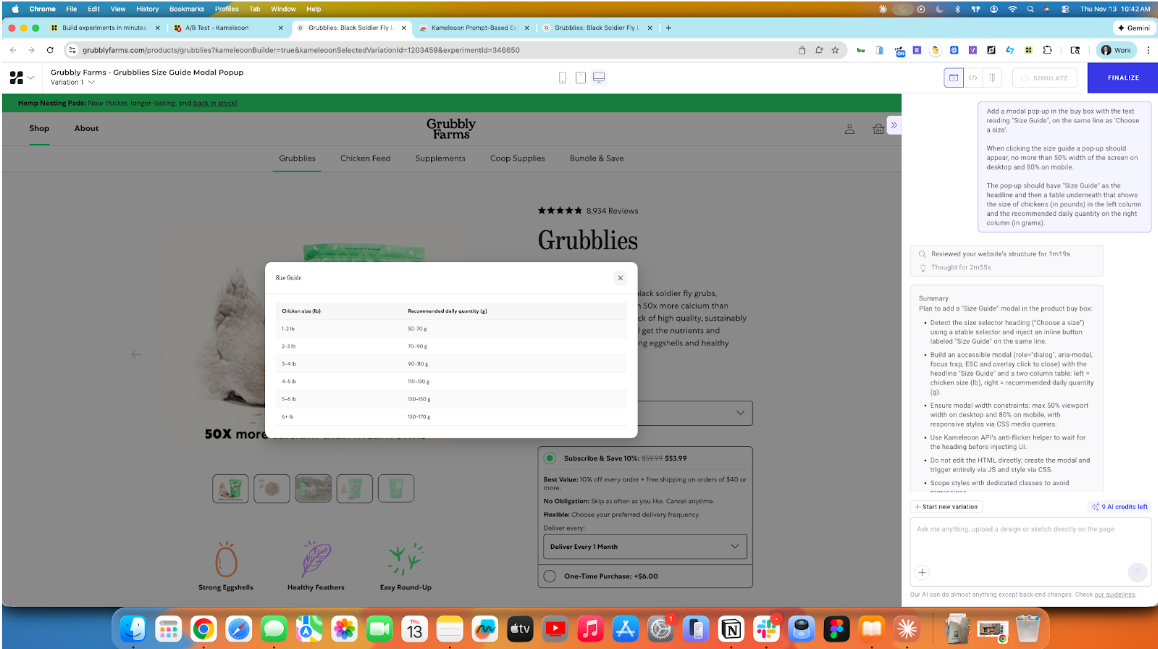
A fully functioning size-guide modal
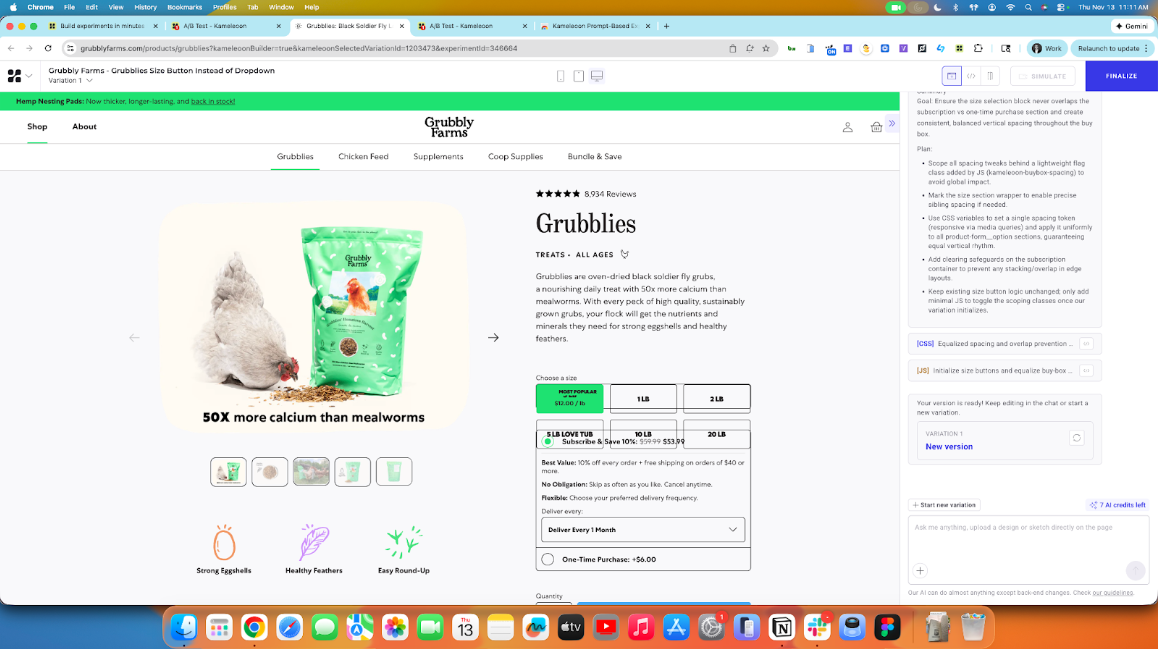
A size selector
AI Is Creating a New option that sits Between Visual Editors and Full Dev Work
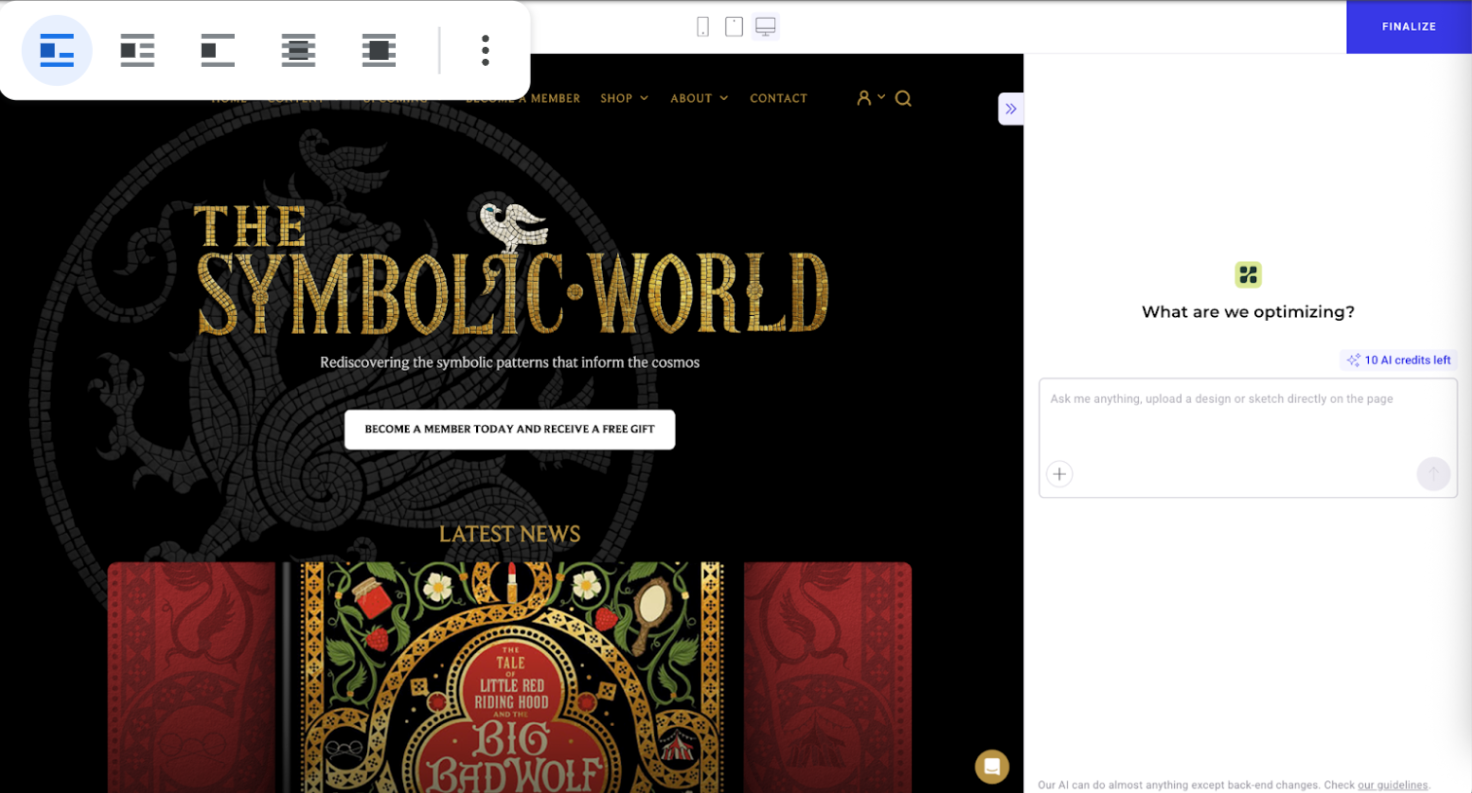
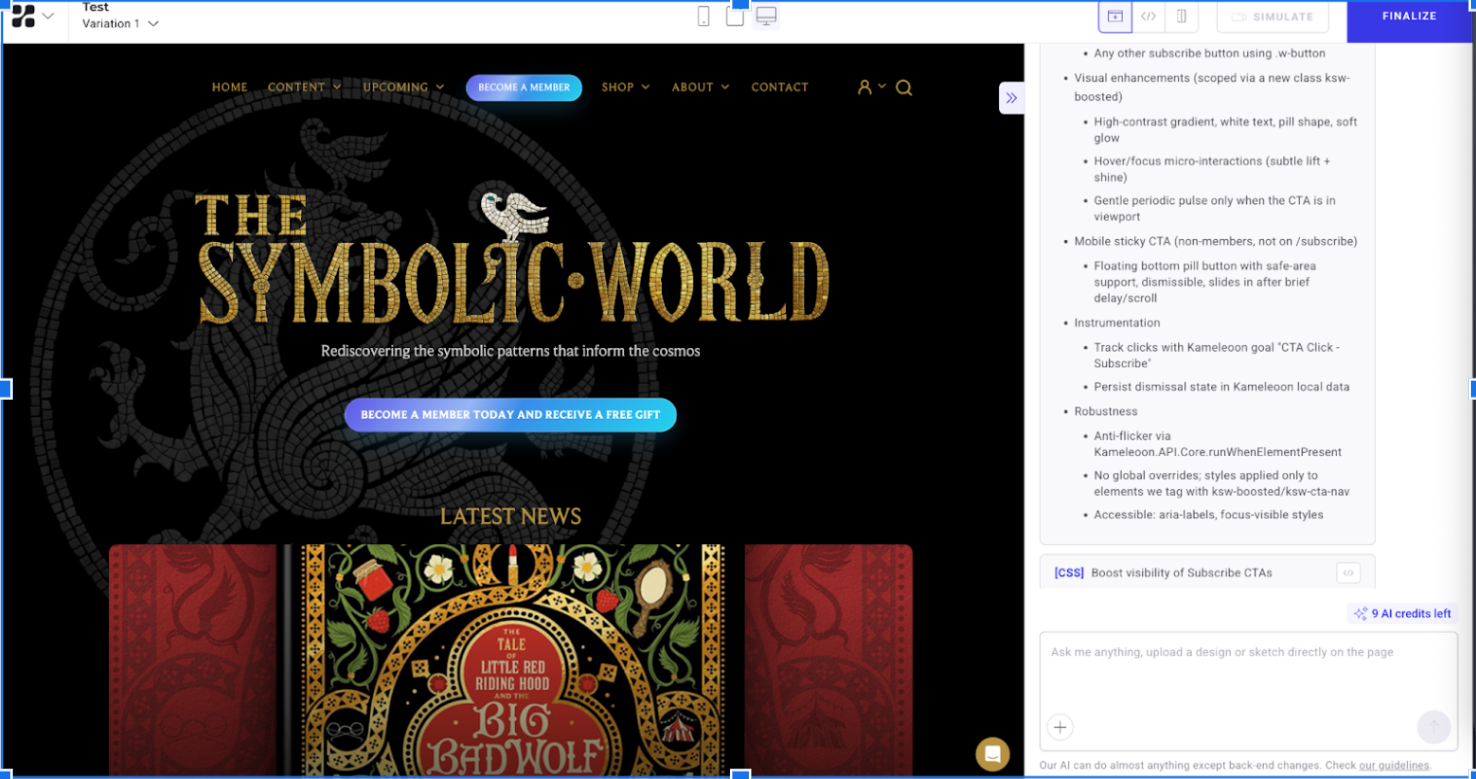
In a separate test, Sean Biava used AI to build a conversion-rate calculator directly on his live site (something he usually prototypes off-site) and also experimented with restructuring a SaaS homepage using updated CTAs and layout tweaks.
The calculator in particular is the kind of change that is “too complex” for a standard visual editor but “too small” to justify a full engineering story. With AI, he got a working variant, and then edited it directly in the browser via a built-in code editor. He noted the experience was intuitive, saving hours of setup and back-and-forth. However, he did encounter some delays where the prompt processing paused longer than expected, but even with that, the overall workflow felt dramatically faster than the status quo.
What This Means Going Forward
If AI continues to evolve this way, the rules of experimentation may shift fast. Imagine running five to ten tests a week instead of one or two a quarter. Or having your product team prototype variant ideas during lunch instead of scheduling two-week dev sprints. That doesn’t mean developers become irrelevant—quite the opposite. They’ll focus on systems, architecture and high-stakes builds. The simple variants? No worries.
The big opportunity isn’t just in speed. It’s in what teams do with that time they save. More time iterating means more time asking better questions: “What should we learn next?” instead of “Can we build this?” AI isn’t replacing experimentation teams — it’s giving them back one of their most precious resources: time.